The AI Stress Tracker That Catches Bad Weeks Early.
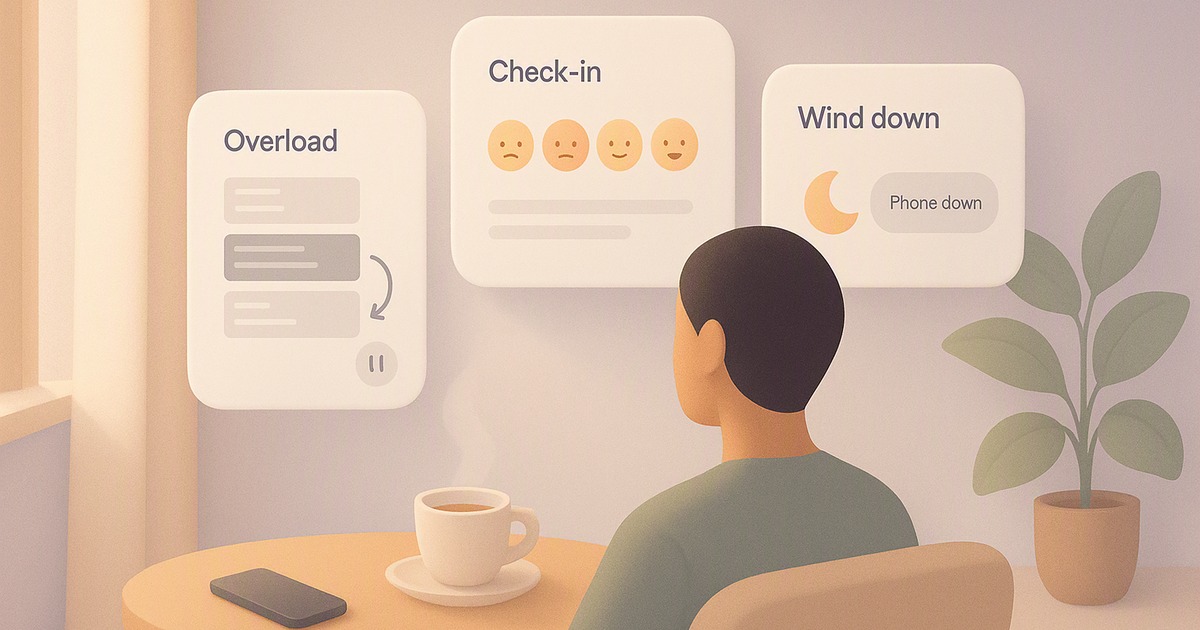
Most stress apps ask how you feel and hand you a quote. Today reads the week that's actually stacking up — back-to-backs, short sleep, skipped breaks — and when your own check-ins agree, it proposes one change that makes tomorrow lighter.
Four hours of meetings — a real break just got inserted.
Gentle nudge
HRV is down three days. A walk after the 4pm call?
Reads signals from —Apple Healthsleep & HRVOura / WhooprecoveryGoogle Calendarload & back-to-backsScreen timefocus & breaksCheck-insmood & energy
The Problem Isn't Stress — It's Noticing It Late.
Stress is a lagging indicator. By the time it feels obvious, the week is already gone. Mood apps hand you a diary and a quote; Today watches the leading signals and does something about the day before it tips.
A generic mood app
A mood diary you abandon by Friday
Quotes instead of change
Weekly averages that hide the bad days
Insight with no follow-through
Today · your AI stress tracker
One-tap check-ins that take five seconds
One concrete calendar change when the load tips
Flags the trend on day two, not week two
Moves the late call, guards the wind-down, follows up
What a Real AI Stress Tracker Should Carry for You.
Catches a Bad Week on Day Two
Short sleep, sliding HRV, six back-to-backs tomorrow — Today flags the pattern the second day it sees it, not the second week. A single rough night stays quiet: nothing fires below a threshold.
A Load That Rewrites Itself
Too many meetings in a row? Today spreads the load, inserts real breaks and protects a focus block — every change a suggestion you approve, none landing without your tap.
A Wind-Down That Actually Happens
The end of the day is where stress either unwinds or compounds. Today guards that hour — pushes the last call, dims the evening agenda, and follows up once so the wind-down really happens.
Check-Ins That Find the Pattern
Two taps in the morning, two in the evening. Over weeks Today links your mood to what actually happens — the Thursday 4pm dip after the 1:1 gauntlet — and names the change that breaks the pattern.
Seen by the People Who Matter
Optional and low-noise: Today can let your partner or team know your week is heavy — without sharing a single detail.
Breaks That Land Between Meetings
Real gaps, not a 9am “take a break” ping. When two long blocks finally end, a walk or stretch reminder lands in the space that actually exists.
A Morning Read Before the Day Loads
Two minutes over coffee: an energy read, the day's load, and the one thing worth protecting. Calm before the inbox opens.
Patterns You Own, Month After Month
A private monthly summary of what drained and what restored you — yours to keep, correct or delete, and to bring to a coach or clinician if you ever want a second opinion.
One Stress Tracker, Four Overloaded Lives.
Same quiet engine — relief shows up in the shape of your calendar, not in a dashboard of feelings.
The Founder in a Brutal Quarter
Eleven-hour days with no end in sight. Today noticed the third short night, checked the load, and proposed the only change that mattered: Tuesday's 8pm investor prep could wait until Thursday.
Load surfaced before the crash
One high-stakes task moved to a calmer day
A break inserted into the longest block
The Team Lead Absorbing Everyone Else's Stress
Her own calendar looked fine; her week was spent inside other people's fires. Check-ins caught the trend her calendar couldn't — and Today started guarding her lunch hour and the Friday wind-down she never took.
1:1-heavy weeks read correctly
Lunch hour protected from meetings
A real wind-down on Fridays
The New Parent Running on Fragments
Sleep arrives in two-hour pieces and the day has no shape. With no wearable at all, Today uses check-ins and calendar load to spot tipping days and pares the agenda down to the essentials.
Works with or without a wearable
Tipping days spotted from light signals
Non-essential tasks deferred
The Analyst Who Can't Switch Off
The workday ends but the thinking doesn't. Today pairs a wind-down window with a phone-down cue and follows up once — the mental close-out his screens alone never gave him.
A guarded end to the workday
A follow-up that lands exactly once
A wind-down that outlasts the first week
Three Steps to Catching a Week Before It Catches You.
STEP 01
Two-Tap Check-Ins
Morning energy, evening load — five seconds each, whenever you have them. Missed days are fine; Today never nags.
STEP 02
It Reads the Week Behind the Mood
Calendar density, sleep, breaks and your check-ins combine into one signal: is this week tipping? Thresholds keep single bad days quiet.
STEP 03
One Change, Your Call
When a pattern shows, Today proposes one concrete adjustment — move the call, guard the wind-down, take the walk. You approve, it executes; nothing runs on its own.
An AI Stress Tracker, Not Another Mood Diary.
Capability
Today
Mood apps
Calendar & notes
ChatGPT plan
Catches a tipping week before you feel it
Partial
Partial
Check-ins connected to your real calendar
Partial
Turns signals into one concrete change
Partial
Quiet unless something is actually wrong
Partial
Guards your evenings and wind-down
Partial
Private memory you can read, edit and delete
Partial
Partial
Today is a lifestyle and organisation assistant. It helps you manage workload, energy and stress — it is not therapy, coaching or medical advice, and it does not diagnose any condition.
Today is available now and free to use. Log in and you get the check-ins, the workload read and the phase-aware calendar on iPhone, Android, macOS and the web.
Is Today a mental-health or therapy app?
No. Today is a lifestyle and organisation assistant: it helps you manage workload, energy and the habits around stress. It doesn't diagnose or treat any condition, and it never replaces a therapist, coach or clinician. What it can do is help you spot a pattern worth mentioning to one.
How is this different from a mood-tracking app?
Mood apps log how you feel and often answer with content — quotes, breathing exercises. Today reads the leading signals behind the feeling — calendar density, sleep, breaks — and proposes one concrete change to the day itself.
Do I need a wearable for it to work?
No. Check-ins plus your calendar are enough to start; Today reads load and your own mood reports. A wearable adds sleep and HRV signals that make the picture sharper, but every signal is optional.
Will it constantly ask me how I feel?
No. Check-ins are two taps, entirely on your schedule, and skipping days is fine. Today only speaks up when a real pattern shows — a single rough day never triggers anything.
What happens to my mood and stress data?
Everything is private, inspectable and deletable — deletions are real. Nothing is shared with anyone unless you choose to share a summary yourself.
What if I'm actually overwhelmed right now?
If you're in crisis or think you might hurt yourself, please contact local emergency services or a crisis line now. For the everyday overwhelm of a heavy workload, Today can start with a single step: defer one non-urgent thing today, and protect one hour tonight.
Catch the Bad Week Early.
Two-tap check-ins and a calendar that rewrites itself — one concrete change when the load tips, nothing noisy. Free to use on iPhone, Android, macOS and the web.